New Patients Are Welcome!

Pediatric Sealants Amarillo
Sealants help prevent decay by protecting the surface of the teeth, especially the back teeth where brushing can be more difficult for children. They are made of a clear, liquid resin that hardens when a special light is shined on it. This creates a smooth, hard surface that prevents food from settling in the grooves of your child’s back teeth.

Sometimes teeth develop a flattened, worn appearance. X-rays may show unusually thin layers of enamel as if sandpaper has been drawn across the chewing surfaces of the teeth. Daily chewing shouldn't erode the enamel so much.
How Are Sealants Placed?
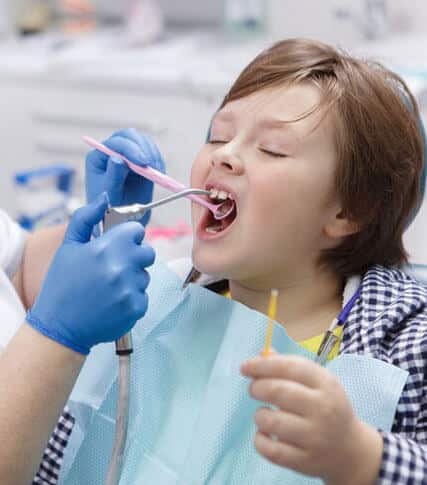
First, the tooth or teeth are washed, dried, and isolated with either cotton rolls or a rubber dam. Then the teeth are etched with a special gel that roughens the teeth, so the sealant material has a rough surface to adhere to. Once that is rinsed off, the sealant material is flowed into the grooves of the teeth and light cured. When all the teeth have been treated, Dr. Thomas Karr and Dr. Clint Hardee check for rough edges and makes sure floss can pass between the teeth.
Generally speaking, there are no side effects with dental sealants unless your child is allergic to one of the ingredients in the resin material, which is extremely rare.

Caring For Your Child’s Sealants
Sealants are sturdy and should last up to 10 years, but may need replacing sooner, depending on your child’s lifestyle. Avoiding chewing on ice and hard candy can prolong their life and prevent chipping which might allow decay to sneak in and rot the tooth from the inside. Dr. Thomas Karr and Dr. Clint Hardee will monitor your child’s sealants at each visit to make sure they are still intact.
While sealants don’t eliminate the need for proper homecare such as flossing and brushing twice daily, they can offer some protection and can even stop minor decay from developing further.